
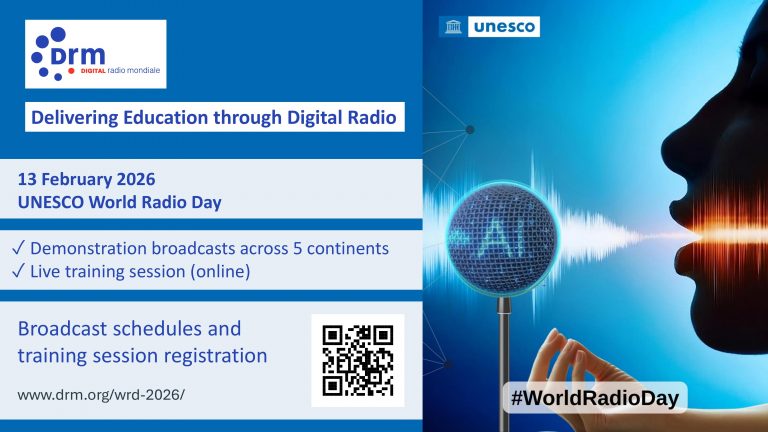
The DRM Consortium will contribute to UNESCO World Radio Day (WRD) 2026 by showcasing how broadcasters can deliver AI-enabled e-learning via digital radio, bringing education to learners beyond the reach of the internet.
Proclaimed in 2011 by UNESCO Member States and adopted by the United Nations General Assembly in 2012, WRD is celebrated every year on 13 February. It is a day to thank broadcasters for the news they deliver, the voices they amplify and the stories they share.
In 2026, UNESCO World Radio Day explores the benefits of Artificial Intelligence for broadcasters.
On WRD 2026, DRM specialists will demonstrate how DRM digital broadcasts can deliver e-learning content – audio, text and images – live or for later use, in one or more languages. A single transmission can reach many learners at once, while low-power DRM receivers convert the signal into a local Wi-Fi hotspot, allowing inexpensive tablets, laptops or phones to access lessons without relying on internet connectivity. Content can be received live and stored locally for on-demand use, ensuring learning continuity even where connectivity is intermittent or unavailable. The Consortium will show how AI technologies can support the creation, translation and tailoring of this e-learning content, including high-quality text-to-speech audio.
- The adoption of the Digital Radio Mondiale (DRM) standard will open a path for countries to provide universal, equitable and resilient education.
- A national DRM system can create a radio classroom that delivers pre-recorded audio lessons supported by Journaline-based digital textbooks, images, and guided activities. This will address chronic teacher shortages and the lack of school buildings so that all learners, even in the most remote areas, receive clear, structured and high-quality instruction even without access to the internet. Multilingual content will include minority groups and remote communities and will strengthen national cohesion.
- DRM-enabled education will also be highly resilient. Broadcasts will continue during floods, storms, blackouts, pandemics, school closures or mass displacement. Built-in emergency alerts will allow education and safety information to reach learners instantly, supporting learning continuity and community wellbeing.
- Over time, DRM will serve as a reliable digital infrastructure for lessons, assessments, homework support and teacher guidance.
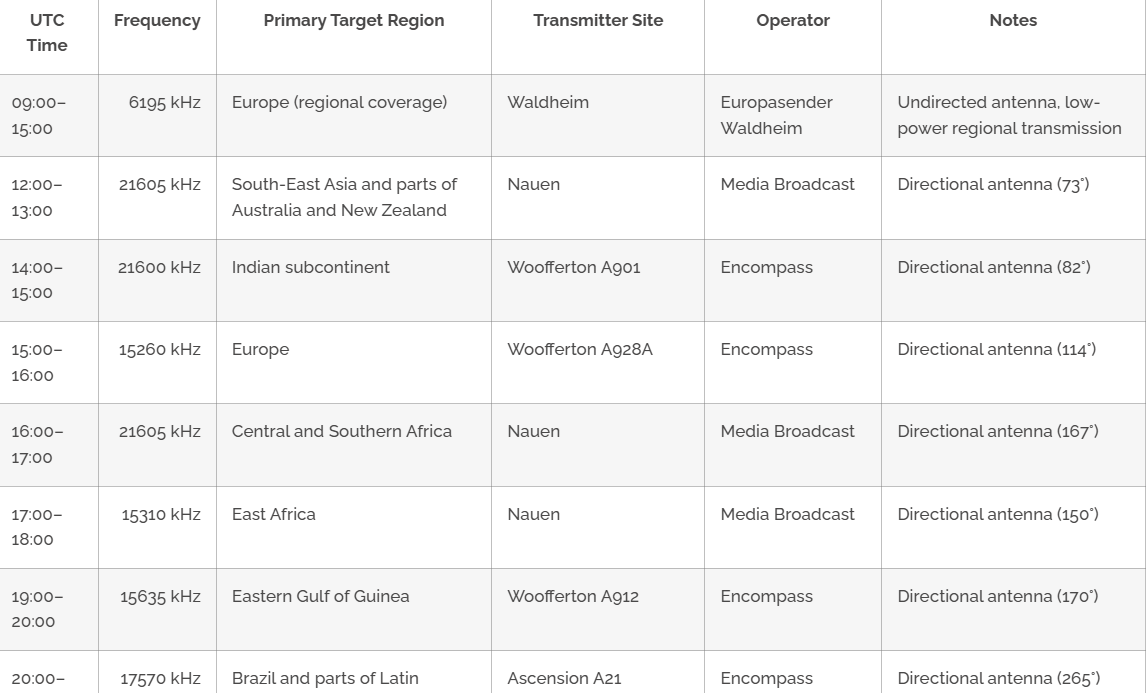
In parallel with the training activities, DRM partners are planning for the first time global demonstration broadcasts on World Radio Day to showcase DRM-based educational services across five continents. These transmissions will demonstrate how AI-enhanced educational content can be delivered via DRM to diverse audiences.
Planned DRM Demonstration Broadcasts – 13 February 2026
 Participants worldwide can register via the link or QR code below and select the time slot that best fits their time zone:
 Friday, 13 February 2026
 Option 1: 09:00 UTC
 Option 2: 15:00 UTC