
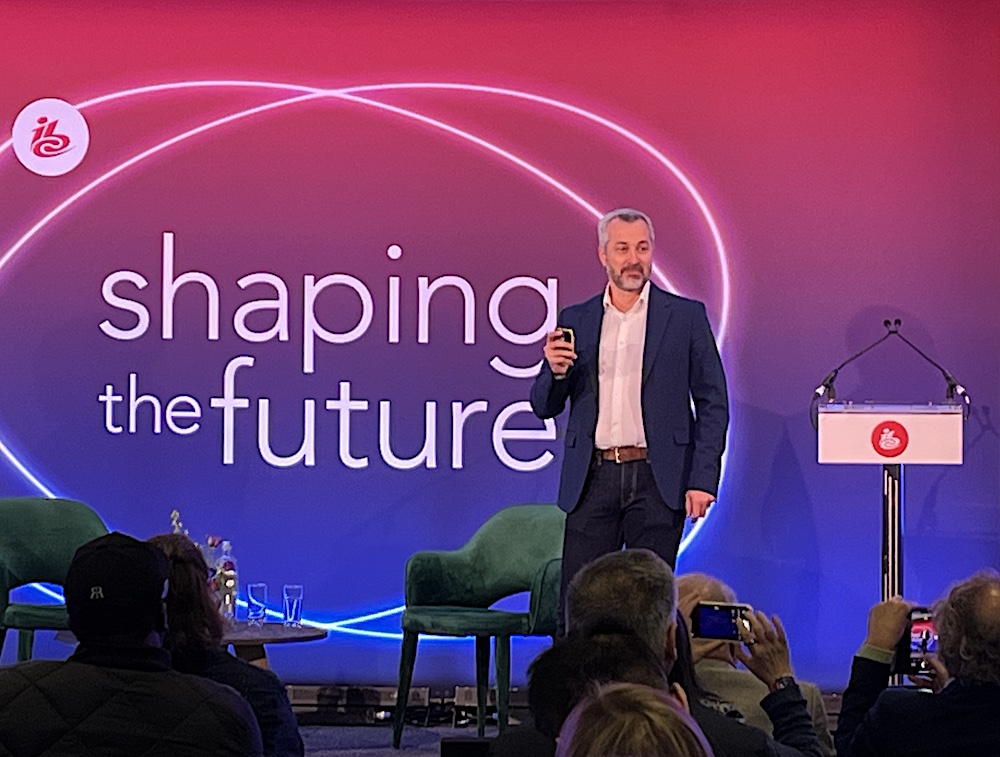
“We assist our journalists to be more efficient, more effective and more impactful in their journalism everyday,” said ABC Australia’s Chief Digital and Information Officer Damian Cronan at IBC25.
In a keynote session he explained the tools that the ABC has created to assist its journalists find the best resources for their stories.
Given the public service mandate and the need for trust in Australia’s national broadcaster, Cronan and his team have been careful to evaluate the most useful and trustworthy tools and deploy them internally where they can make the most impact.
“Our approach is Human-led, AI-powered and built on Trust. Our ABC Assist tools are supporting our storytelling and enabling the ABC to deliver richer content faster, while keeping humans firmly in charge,” he said.
Cronan’s team have developed two internal AI assistants, the first, called ‘ABC Assist’ helps journalists and program makers quickly understand and tap into the ABC published coverage across its newsrooms, radio networks and television shows. Users of the system, played as part of Cronan’s presentation, acknowledged that it helps them to know more about who has been interviewed on a particular topic across the ABC’s 65 radio stations and 6 television outlets. The AI model is trained to recognise time code so that it can take reporters to the exact point they want, rather than having them scroll through minutes or hours of content. The system is locked inside the ABC’s internal environment.
The second assistant, called ‘CoDA Assist’ surfaces published and unpublished content from the massive ABC archives going back more than 90 years.
CoDA is the internal name for the national broadcaster’s digital archive. While it has been searchable for some time at staff desktops across the corporation’s studios across Australia and internationally, it was limited in the way it was indexed, because it depended on staff entering keywords and manually logging speakers and content for material gathered over decades. The CoDA Assist function can scan film or tv images and identify key words in radio interviews using speech to text tools, to identify speakers by faces, locations or their voice. This has surfaced more content much more quickly than if it were done manually and has uncovered long lost content that could still be relevant to stories being written today, allowing reporters and presenters to deliver deeper understanding to the audience in their news reports and radio interviews.
“It has dropped the turnaround time for research and discovery, and is also generating new story ideas,” said Cronan, who also acknowledged that journalists don’t always find it delivers what they want. “We know we need to do more work on relevance, we are starting to experiment with large language models…
“Getting the AI to deal with structured content has been quite a challenge… We are also working with staff to help them understand how to use the content that is produced.”
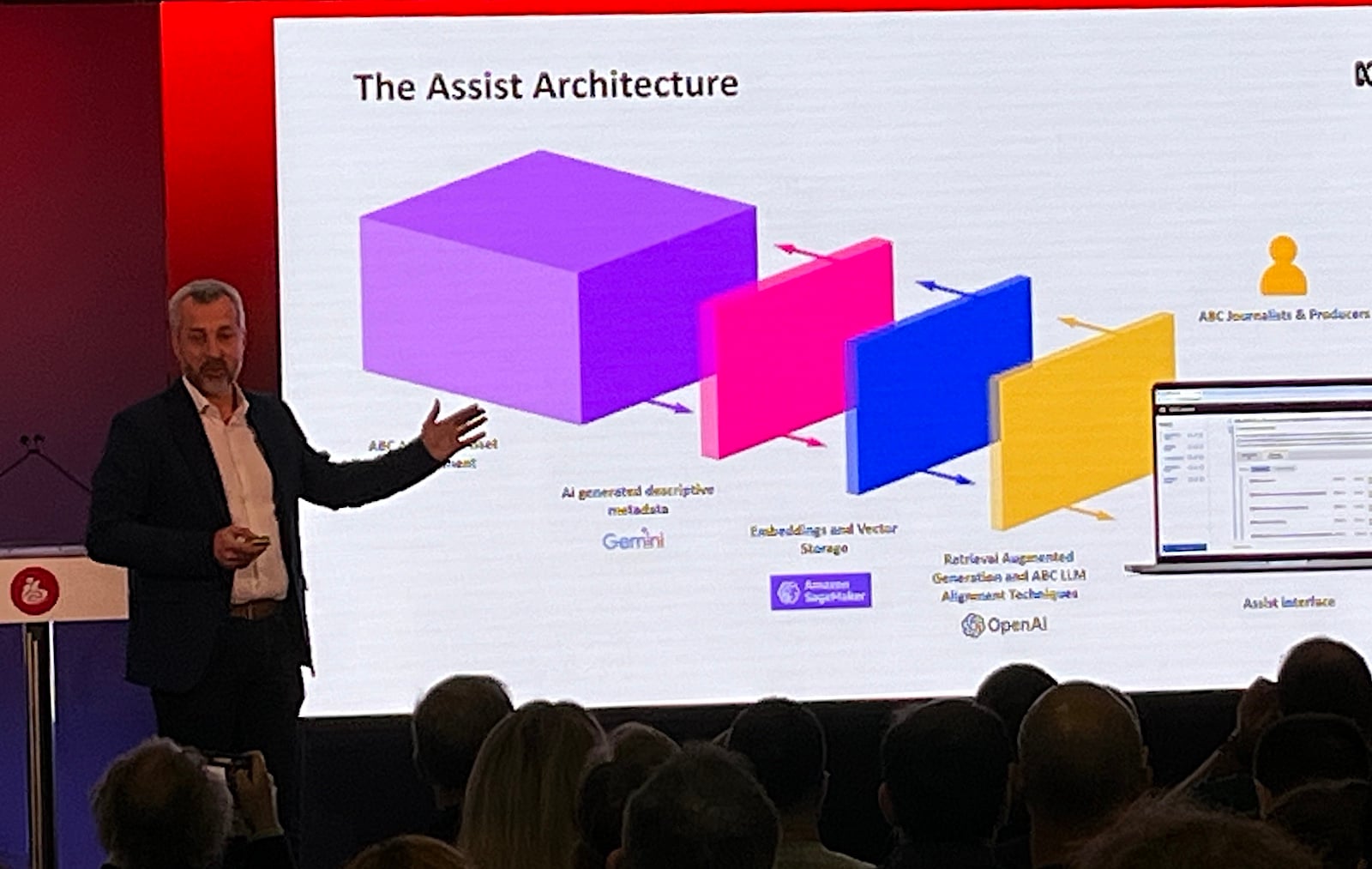
The ABC uses Google Gemini to process, read and understand the archive. The output is stored in an Amazon Sagemaker vector store that acts as a search index and retrieved using OpenAI.
Future developments will include personalised content for audiences and using ABC Assist for local newsrooms across the country. Cronan is adamant, there will “always be humans in the loop,” because that is very important for public service media.