
Over the next few weeks, Steve Ahern will report on some new technology tools and AI trends for the audio industry. Here is the first of his articles.
Music is both a creative art and a technical craft, it requires artistic inspiration and musical skills.
Talented musicians have the creative and the craft skills to compose great lyrics, come up with a tune, use their musical talents to play the notes on a musical instrument and then to record and mix the end result. Sometimes solo musicians have all the required talent and skills to do it all themselves, other times they collaborate with others to create the final result.
But what if you don’t have all the musical skills required or the collaborators to work with, but still want to make music?
A new product, called Splash Music, has been created to answer that question.
Developed a few years ago with funding from Amazon and further developed as part of last year’s Amazon Web Services Accelerator program to incubate new software products, the tech startup company called Splash Music aims to change that, by giving people the tools to hum, sing and speak into an app then use the AI tools in the app to create and share a song. “It is a creative engine.”
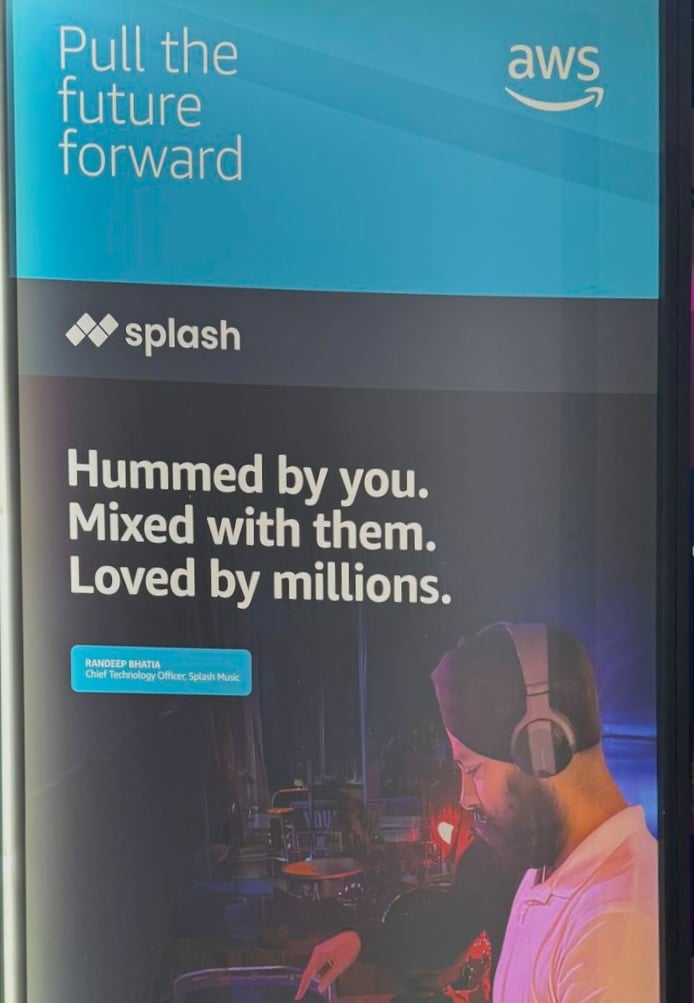
Splash Music was initially aimed at children who may not have had the chance to learn music but still want to create songs, but it has expanded into gaming and other professional areas. Radio and podcast teams could use it to create their own songs or advertisements. It also has the potential to allow personalities to collaborate with their audience to create fun promotions by building tunes and lyrics collectively with their listeners.
Now that the product has been launched, Splash creator Randeep Bhatia explained the use-case at this month’s AWS Summit, saying:
“A musician has to take a lot of steps – think of the song, learn the instruments, record it, distribute the song…
“Yet we can all create music, we have been humming since birth. Our model allows users to create music in the most natural way, by humming and singing.
“We are not a music company, we allow people to make their own music… You don’t need industry connections to get their music published, just your imagination can get your music to millions of people around the world,” he said.
‘Dreamed by you, mixed by us’ is the slogan for Splash Music. It offers a free tier, but for anyone using it regularly to create and share music on socials or to use it for broadcast related tasks, there is a paid tier with more options.
Bhatia says AI has “changed our world.” Splash uses AI to make “the technology disappear into the background, to bring creativity to the foreground.”
Using AI, Splash has “built flexible trained datasets” with the “flexibility to match any type of song.” The AI was trained by hiring commissioned musicians to create music specifically to train the AI engine. Splash also works with AI visualisation engines such as After Effects and Midjourney to create videos associated with the original songs.
Users can use their own voice (re-tuned if they are singing out of tune) or use synthetic voices from the app. They can sing into their phone and there is also now a new Alexa skill that allows creators to sing into their Alexa smart speaker to create a song.
A creation and sharing engine called Roblox is part of the system, allowing creators to share music on social platforms, in games, as background music for videos created within the system and other uses, with licencing considerations taken care of by the platform.
Parent company Kaimix retains the licence to each track, but grants usage rights to the creators, as explained in the app’s Terms of Use:
Kaimix may use all Mixes, and the Vocal Verses and Melody Inputs submitted by you, for any purpose, including for commercial purposes, without payment or attribution. In particular, but without limitation, you agree that we may:
(a) export Mixes to the Splash game on Roblox;
(b) use Mixes for marketing purposes;
(c) use materials provided by you for publicity or demonstration purposes,
(d) include Mixes in a music library, or
(d) grant rights in Mixes to third parties (including, but not limited to the right to allow the Artist that inspired or provided the Template used in the Mix to commercially exploit the Mix).
In a policy that could be seen as exploitative of creators, Kaimix has “a royalty free, irrevocable licence to reproduce, communicate and otherwise use and exploit any Melody Input or Vocal Verse submitted by you, to the extent required… to operate Kaimix.” Tracks must be used within the ecosystem but can be shared mroe widely by using links back to where the song is hosted.

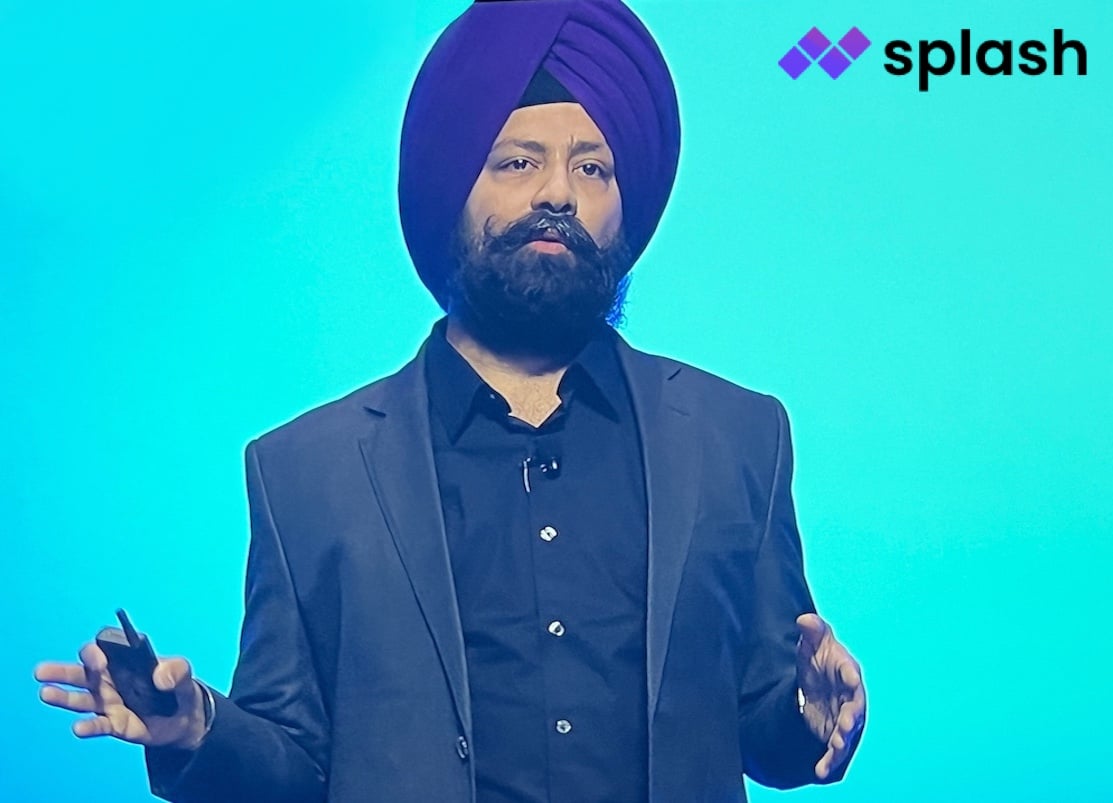
Randeep Bhatia on stage at AWS Summit Sydney (c) radioinfo
It seems to be a balancing act, presumably Splash will potentially make some money out of licencing payments from various social media and gaming platforms, to offset the costs of setting up the software and paying rights and commissioning fees to musicians and singers. The details of the business model are not public, as far as I could tell when researching the company.
There are many ethical areas when using AI in the field of creative arts, but this company seems to have been created using an ethical approach to AI usage. Time will tell if it continues.
Of course, human musicians may object to the technology on the grounds that it takes away creative skills and devalues the art of playing real musical instruments. This is a valid point, relevant to so much new technology being developed with AI, but it is unlikely to stop the tidal wave of technological change that is taking place.
Just as musicians and music publishers adapted to the Moog Synthesiser, the electric guitar, music streaming services and Autotune software, they will have to find a way to adapt to the changes that continue to come thick and fast. Splash Music is just one of those changes.
The first step in adapting is understanding it, then experimenting with it, then working out how it changes old ways of doing things, determining if it needs regulation or oversight, and finally devising plans to monetise the new technology in a way that benefits everyone, including those whose jobs are affected by the change.
Two other innovations of note from last year’s acceleration program are:
- A South Korean based startup called Typecast, an AI-powered content creation service that enable users to “create audio and video that leverages AI voices and avatars.” See Typecast AI.
- An India based startup called Unscript that uses generative AI to create studio-quality videos with real or virtual actors, without physical shooting and can render one video into many languages using synthetic video lip-sync technology. See Unscript AI.
About the Author:
Steve Ahern is the founding editor and publisher of this trade journal.
He is a regular writer about technological changes, and delivers training and business consultancy to broadcasters and media companies.